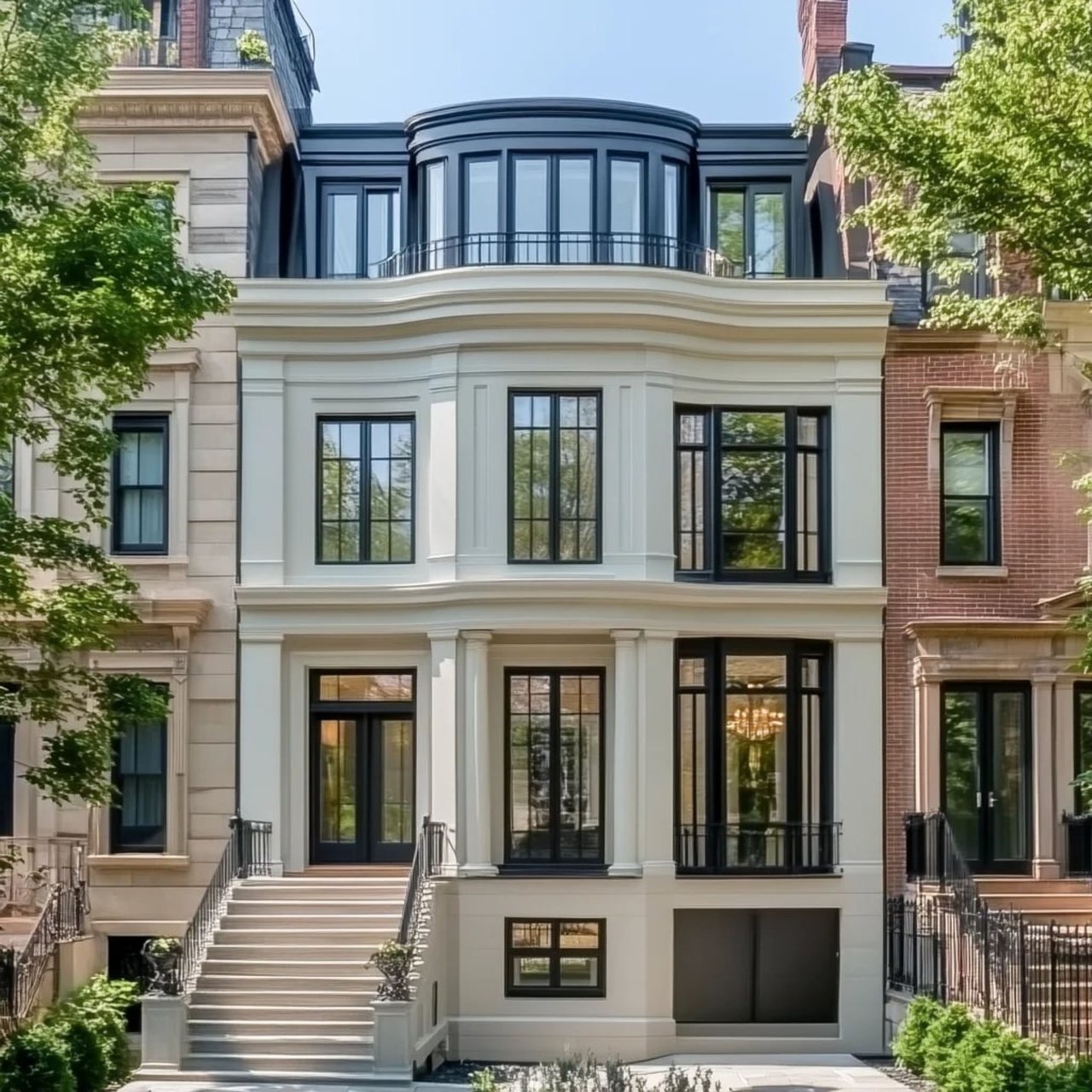
Something is shifting in the Boston area real estate market. Across the western and northern suburbs, a quiet migration is underway. The children have left. The four-bedroom colonial with the big yard that made perfect sense for twenty years suddenly feels like a different calculation. And increasingly, the answer that buyers are arriving at is the same one: it's time to go back to the city. This is not a niche trend. It is a documented, data-backed behavioral shift that is reshaping how luxury real estate moves in Boston. Discover how 25 Beaver Place in Boston changes the equation entirely.
The Numbers Behind the Move
The back-to-the-city movement among older buyers has been building for years. According to the National Association of Realtors, purchases of urban homes by buyers between the ages of 50 and 59 grew meaningfully through the 2010s as empty nesters began trading suburban space for urban access. By 2024, the share of home purchases in urban centers had climbed back above pre-pandemic levels, according to reporting by HousingWire, reflecting a sustained trend rather than a momentary blip.
The motivations are consistent across markets. Maintenance fatigue — the endless cycle of lawn care, snow removal, roof repairs, and the upkeep burden of a large home — is a primary driver. So is the desire for access: restaurants, cultural institutions, walkability, and the sense of being where things are happening rather than commuting to them. And for many buyers, there is simply the recognition that a home built around the needs of a family of five no longer fits a household of two.
As one demographic researcher put it: boomers transitioning to empty-nester status don't have many limitations on where they live — and in that context, density becomes genuinely attractive. The city offers things that even the finest suburb cannot fully replicate.
What Most City Properties Get Wrong
Here is where the conversation gets more nuanced, and where many buyers who are genuinely drawn to Boston end up hesitating.
The typical city purchase — a condominium in Beacon Hill, a townhouse in Back Bay, a flat in the South End — involves real trade-offs that buyers coming from the suburbs are not always willing to accept. Vertical living, with four or five floors and a staircase that becomes less appealing with age. A single parking space, or none at all. No private outdoor space, or a postage-stamp terrace that doesn't invite actual use. Building hallways, shared entries, and neighbors on the other side of every wall.
For buyers who have spent decades in a house with a real yard, two garage bays, and the kind of space that allows for genuine privacy, those trade-offs feel significant. The city they want to return to does not need to be the city that forces compromises.
That is exactly why 25 Beaver Place is worth understanding in full.
25 Beaver Place, Boston: City Living Without the Compromises
25 Beaver Place is not the typical Boston city purchase. It is a home that was designed for people who want exactly what it offers: the best of urban living without sacrificing the things that make a home genuinely livable.
Here is what sets it apart:
Two-floor living. Not vertical. Not five stories of stairs. Two floors, laid out horizontally, in the way that people who have lived in houses actually prefer to live. This is exceptionally rare in Boston's most desirable neighborhoods, where vertical townhouses are the default and single-level living is essentially unavailable without significant trade-offs.
Four parking spaces, including two garage spaces. Stop for a moment and consider what this means in the context of Boston real estate. Four spaces. Two of which are garaged. For a household with two cars — and the occasional visitor or adult child returning for the weekend — this is not a small thing. It is a life-simplifying feature that changes the daily experience of living in the city.
Private outdoor space. Not a shared courtyard or a building rooftop but the kind of private exterior that makes a summer evening at home feel like a genuine option rather than a compromise. For buyers transitioning from a suburban backyard, this is often the feature that seals the decision.
The Beacon Hill location. Beaver Place sits in one of Boston's most storied and beautiful neighborhoods. Beacon Hill's gaslit streets, Federal-style architecture, and proximity to the Boston Common, Charles Street, and the Back Bay create a daily environment that is simply without peer. Walking to dinner, strolling in the Public Garden, or grabbing coffee on Charles Street is not an occasional pleasure — it is the routine.
The lifestyle this enables. Think about what daily life looks like here: a morning walk through the Common, dinner at a restaurant that is two blocks away, no lawn to mow, no driveway to shovel, no commute to the cultural life of the city. And then returning home to your own front door, your own garage, your own outdoor space, rather than an elevator lobby and a long hallway.
Who This Home Is For
25 Beaver Place is purpose-built, in a sense, for the buyer who has done the math and reached the same conclusion that so many others are reaching: the suburban chapter is complete, and the next one should be the best one yet.
It suits empty nesters who want to trade the responsibilities of a large suburban home for the freedoms of city life — without feeling like they are downsizing their quality of life. It works for couples who want Boston as their home base while maintaining the flexibility to travel, spend time with family, or simply live life less encumbered. And it is an ideal solution for buyers who have hesitated at the typical city purchase because the trade-offs felt too significant.
Here, there are no trade-offs to make.
How to Think About This Transition
The practical steps of this kind of move are worth considering clearly. Timing the sale of a suburban home relative to a city purchase requires careful coordination, particularly in a market where desirable city properties move quickly. Understanding the tax implications of selling a long-held primary residence, and the estate planning context that sometimes shapes these decisions, matters. And working with a broker who knows both markets — the suburbs and the city — at a genuinely sophisticated level is essential.
Beth Dickerson at Gibson Sotheby's International Realty has guided buyers through exactly this transition more times than almost anyone in the Boston market. She understands what people are leaving behind and what they are looking for — and she knows which properties actually deliver on the promise of city living without the compromises.
If the suburbs-to-city move has been on your mind, this is the moment to have a real conversation about what it looks like in practice. And if you want to see what that life looks like at its best, 25 Beaver Place is the place to start.
Connect with Beth for a private showing or a confidential conversation about making this transition on your terms.
FAQs
Why are empty nesters moving back to Boston from the suburbs?
The primary drivers are maintenance fatigue from large suburban homes, a desire for walkability and cultural access, and a life stage that no longer requires proximity to school districts or large square footage. Boston offers a quality of life that rewards this transition.
What are the biggest challenges of moving from the suburbs to the city?
Most buyers cite parking, private outdoor space, vertical living in multi-story townhouses, and the adjustment from a house to a condo or smaller footprint. 25 Beaver Place at Beacon Hill addresses all of these concerns directly.
What makes Beacon Hill a good choice for empty nesters?
Beacon Hill offers walkability to the Boston Common, Charles Street, and the Back Bay, beautiful historic architecture, and a neighborhood scale that feels intimate and residential rather than overwhelming. It consistently ranks among the most desirable addresses in the city.
Is it a good time to sell a suburban home and buy in Boston?
Market conditions vary, but the underlying demand for well-positioned Boston city properties remains strong. Working with an experienced broker who knows both markets is the best way to navigate timing and strategy effectively.
What should I look for in a Boston city home as an empty nester?
Prioritize single or two-level living where possible, parking (a premium in Boston), private outdoor space, and a neighborhood that offers walkability to daily amenities. Properties that combine these features — like 25 Beaver Place — are rare and tend to hold value exceptionally well.